Lick, Bite, Chew, Scratch. Why is my dog so itchy!
Could your dog be suffering from skin allergies? One sure sign that they could be is that your dog is always itching. After preventive care, itching is the most common reason for dogs to see the veterinarian. Many dogs suffer from itching that causes them to scratch, bite, lick, rub and traumatize themselves - and it can drive everyone in the household a bit nuts!
If curing itching in dogs was simple or straight forward, veterinarians would have already done it and no dog would have to suffer. Sadly, figuring out what is causing the itch and what can stop it is often complicated and takes a lot of time, effort and money.
Your dog’s itch is just a symptom. The itch usually has a main underlying cause or primary disease such as:
- Allergies to things in the air, like pollen
- Allergies to food, usually protein
- Contact allergies
- Parasites, like fleas, scabies, cheyletiella or demodex
- Ringworm
- Autoimmune disease
- Cancer
The primary diseases and the associated trauma to the skin from scratching disrupt the normal protective barrier of the skin, allowing secondary disease such as:
- Bacterial infection
- Yeast infection
Additionally, anxiety, stress, and boredom can exacerbate the itching.

To successfully manage your dog’s itching, your veterinarian will have to do some tests to determine the primary disease and the secondary diseases. Remember, itching is a symptom, not a disease, and the most successful treatment involves identifying and treating the underlying cause. Your veterinarian will use a stepwise approach to try to get to the bottom of this challenging problem.
Step One - Your veterinarian will take a thorough look at your dog's medical history and ask what symptoms you are seeing to make a list of the most likely causes. Some common questions include:
- How old was your dog when the itching started?
- Is the itching getting better, worse or staying the same?
- Does the itch get better and then come back?
- Is it seasonal or nonseasonal?
- Has any treatment worked in the past?
Step Two - Your veterinarian will check for parasites. This may include combing thoroughly for fleas and using acetate tape and a scalpel to scrape the skin to collect samples to look at under the microscope for cheyletiella or demodex.
Step Three - Your veterinarian will look for the presence of bacteria or yeast by pressing a microscope slide on your dog’s skin, staining the slide and looking at the material under the microscope.
Based on the findings from steps 1-3, your veterinarian may choose a treatment that will likely be effective. This can include:
- Anti-parasitic medication
- Topical and/or oral antibiotics
- Topical and/or oral antifungal medication
- Topical and/or oral steroids
- Oral anti-itch medication
Step four - If your dog has recurrent episodes of itching or does not respond to therapy, your vet may recommend more even more tests. These tests can include:
Blood work. Your veterinarian will be looking for changes in screening blood work that suggests there may be an underlying endocrine disease. Some endocrine diseases like Cushing's disease and hypothyroidism make dogs more likely to develop skin infections. Diagnosis of these diseases may require further tests. Treatment for endocrine disease varies by disease.
Skin culture. Your veterinarian will rub a sterile swab over the affected area and will send the sample to the laboratory. In the laboratory, the material will be placed in a special dish with agar to see if any yeast or bacteria will grow. If there is growth, the lab may be able to identify exactly what type of yeast and/or bacteria is present and what medications are likely to kill them. Your veterinarian will make medication recommendations based on these results.
Skin biopsy. Your veterinarian will anesthetize your dog and surgically take a few small samples of the areas affected most. Your dog will likely go home with a few stitches. These samples will be sent to the laboratory to look at the skin itself for clues. These samples may reveal parasites, auto-immune disease, cancer or other causes of disease. Treatment will depend on the findings.
Food elimination trial. Food allergies can cause recurrent itching and skin infections. Most commonly, dogs are allergic to the protein component of their diet. To figure out if this is the case, and if so, what protein your dog is allergic to, your veterinarian may recommend a food trial. A food trial involves eliminating all food except the diet prescribed by your veterinarian. This food will contain only one protein - either a novel protein, like kangaroo, that your dog will never have eaten before or a hydrolyzed protein that has been treated so that your dog’s immune system will not react to it. You will feed this diet, and only this diet, for at least 6–8 weeks to see if your dog’s itching improves. If there is an improvement, then the old food is given to your dog for 7-10 days. If the itching returns when the old diet is fed, the diagnosis is made.
A blood test or intradermal skin testing for allergies to things in the environment. These tests look for your dog’s reaction to environmental allergens, such as grass, trees, pollen, mold, dust mites, etc. If your dog reacts to these allergens, your veterinarian may recommend “allergy shots” similar to those given to people.
If you are lucky, you may get to a diagnosis for your dog’s itching. While treating the underlying disease, your dog will need to also be treated for any yeast or bacterial infections with oral and or topical medications and will need relief from the itching.
As you can see, underneath what seems like a simple itch can be one or more very complicated diseases that cannot be relieved a simple "recipe" that will be effective in all cases. Just like in human medicine, a specialist may be necessary to get to a proper diagnosis and treatment for your dog's itching. A board-certified veterinary dermatologist can be found here acvd.org/tools/locator/locator.asp





 * Nicole Wilde is an internationally recognized, award-winning author and lecturers, as well as a professional canine behaviour specialist and Certified Professional Dog Trainer (CPDT-KA). Her 11 books include Don’t Leave Me, Help For Your Fearful Dog, and Keeping the Peace: A Guide to Solving Dog-Dog Aggression in the Home.
 Parabens: Parabens are preservatives that can be found in everything from food to beauty products. They are listed as a Category 1 Priority Substance by the European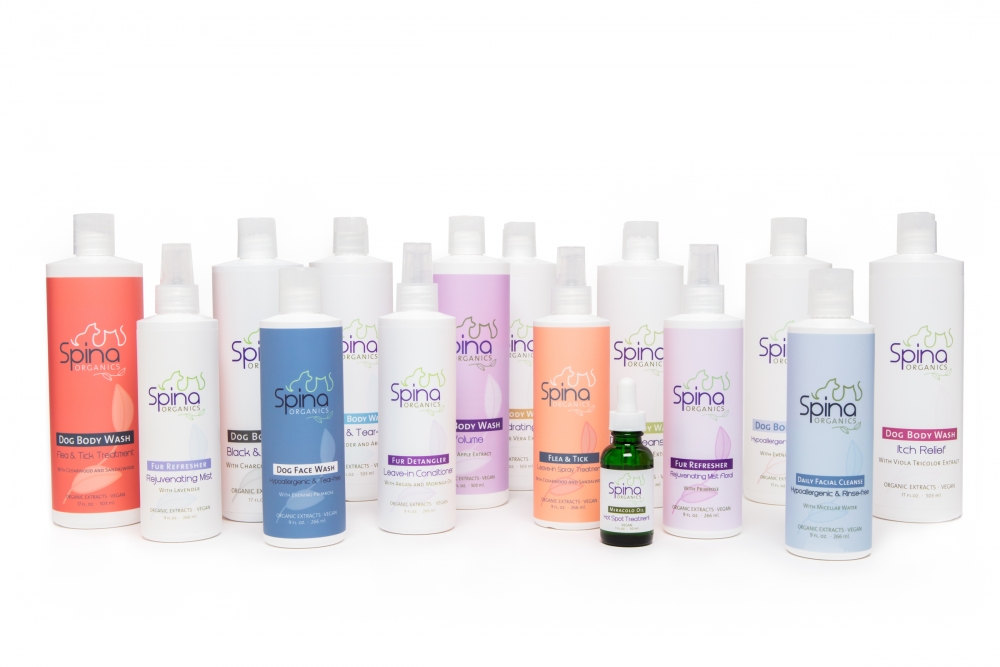


 1. Yogurt is a good source of available calcium and protein. When choosing yogurt, pick one that has live active bacteria and no sugars or artificial sweeteners. The active bacteria may act as probiotics. If your pooch is pudgy, make sure that you pick fat-free yogurt but not one that contains fat substitutes (e.g., Simplesse or Olestra). Frozen yogurt is a nice summer treat for dogs.
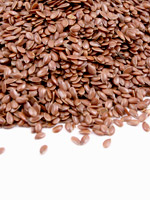 2. Flax seed (ground or oil) is a good source of omega-3 fatty acids, which are essential fatty acids that are good for skin and coat. Whole flax seeds are best if ground right before feeding as this type of fat can go rancid quickly. Flax seed can also be added to your dog’s diet as a source of fibre. Flax oil is a more concentrated form of omega- 3 fatty acids without the fibre. Make sure that you store the oil or seeds in the fridge in an air tight dark container.
  3. Salmon is a fatty fish which is also a good source of omega- 3 fatty acids. These fats support the immune system and can be beneficial for skin and coat health. There has also been some indication that they may benefit dogs with allergies. You can feed salmon or salmon oil. If feeding salmon, make sure it’s cooked before serving, as raw salmon can carry a parasite that can make your dog sick.
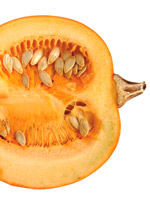 4. Pumpkin is a good source of fibre and beta carotene (a source of vitamin A). Dogs need fibre in their diet. The current trend is towards highly digestible diets that lower stool volume and this is not necessarily a good thing. Keeping the GI tract moving helps keep the cells lining the gut healthy.
 5. Sweet potatoes are another source of dietary fibre and contain vitamin B6, vitamin C, beta carotene, and manganese. Sweet potatoes are great sliced and dehydrated as a chewy treat for your dog. There are so many dog treats on the market that we often overlook the simple, healthy, and reasonably priced treats available at our grocery store.
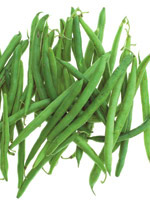 6. Green beans are a good source of plant fibre, vitamin K, vitamin C, and manganese. If your dog has a tendency to put on weight, then replacing some of her regular food with green beans is a great low calorie way to fill her up and help her maintain a healthy weight. Many dogs enjoy green beans frozen.
 7. Eggs are a great source of very digestible protein, riboflavin, and selenium. For some dogs that are prone to digestive upset, eggs can give them a little protein boost. Adding eggs to your dog’s food is a healthy treat. Make sure to use cooked whole egg, as raw egg whites can cause biotin deficiency. If you do a lot of training with your dog, consider taking cooked eggs to your next class as training treats.
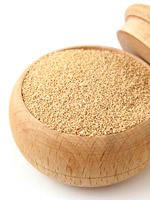 8. Brewer’s yeast is the yeast that’s left over from making alcohol. Dogs seem to really enjoy the tangy taste of brewer’s yeast. It’s full of B vitamins which are good for skin, coat, and carbohydrate metabolism. Make sure you’re using brewer’s yeast (available at health food stores), not baking yeast which will make your dog sick. Brewer’s yeast can spice up your dog’s appetite. Just sprinkle a little on the food of a picky eater and watch her dive into her food.
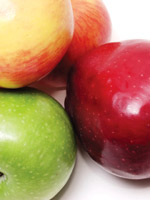 9. Apples are wonderful crunchy treats for your dog. Apples with the skin on are full of plant chemicals (phytonutrients) that are thought to be protective against some types of cancer in humans. They are a source of vitamins A and C and fibre. Apple seeds, however, contain cyanide so your dog should not be allowed to eat the core. Though the effects of a few apple seeds will likely not harm your dog, the deleterious effects can accumulate over time if allowed to eat apple seeds regularly. To safely feed your dog apples, slice the apples into smaller pieces and make sure no seeds are present in the pieces you're giving your dog. Another good idea is to start in small quantities so your dog can become accustomed to a new ingredient in their diet.
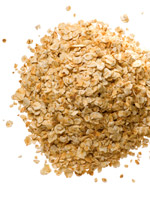 10. Oatmeal is a good source of soluble fibre. This can be beneficial for some older dogs that may have trouble maintaining bowel regularity. Oatmeal is also an alternative source of grain for dogs that are allergic to wheat. It can be fed in conjunction with probiotics to enhance their function. Keep in mind oatmeal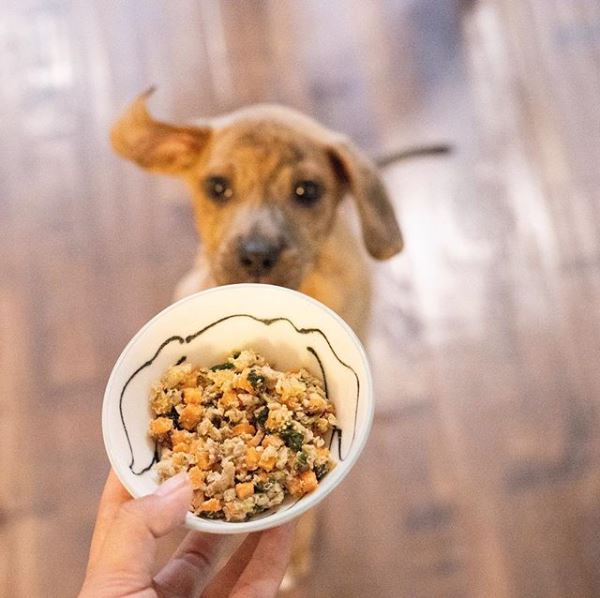


 #
#
 #
#